Interview: Jay Watson
The car will talk to you. Sometimes it's perfect right where it is. Don’t move it, let's work it. Other times you have to recognize: we have 30 minutes here, we need to move on.
Rob: Tell me who you are, where you're from, and what kind of work you do.
Jay Watson: I'm a commercial photographer, and I've been freelance for a long time. I originally started in Baltimore—assisted there, went to college there, got a degree in photography. I almost moved to New York when it was time to hang my shingle and start my own thing, but at the last minute I said, “Let me go check out California.”
I really fell in love with the Bay Area because the locations were good, there was a lot of energy, a good music scene, the beach, the mountains, and good cycling and sports. I felt like if I went to New York, my whole portfolio would be urban. I like that look, but I wanted some other options.
As for what I do now, it’s about four or five different areas. I got started with editorial portraits, which I still love. Under the umbrella of lifestyle, I shoot sports and fitness. Corporate work. And then automotive. Lifestyle and automotive are my most fun assignments.
 Rob: Tell me about how you got into automotive. Was it something you had your sights on from the beginning, or did it develop later?
Jay: This is a really fun story to tell, because you never know where your work is going to go. There's no formula. So, I shot a little bit of lifestyle—low riders and hot rods, because that's part of California culture. I was also shooting a lot of skaters and surfers. I had this gallery of portraits, and a person reached out and said, "Can you shoot some drivers we have for a race series in that similar style?”
I did, and he loved it. He said, "This is not what I expected. Do you want to come shoot the race?" I'd never shot a race before. It was an F3 race at Sonoma Raceway. I did it, approached it in my own way, and he said, "Do you want the contract to shoot the whole series for the summer?" And then: do you want to do it next year? The year after? I did it for three or four years.
The whole time I was like a sponge, absorbing every opportunity. Shooting all the cars, the drivers, the mechanics, the support team, the track—just taking advantage of it as much as possible. I knew I was building an automotive portfolio that was going to be unique. Then I started getting jobs outside those contracts: magazine work, Porsche, Mercedes, Audi. It started evolving.
And it all started because I had portraits of skateboarders shot on a white background. You just never know.
Rob: Does it go the other way, too? Does automotive lead to other types of work?
Jay: Automotive gets a lot of respect, especially if you can light it. When I used to assist, seeing someone light a car in a studio was intimidating. It's a lot of work and manpower. But once I had to figure it out myself, once I could light cars in a studio, the confidence just gets pushed all the way. It led to other weird opportunities. An aviation company said, "If you can shoot cars and mechanics, you can shoot our plane." Then a tractor-trailer company came along, and I had to light a tractor trailer. It's the same thing as a car, just scaled.
It's just weird how it all came out of skateboarding and an affinity for California culture.
 Rob: How do you think about lighting a car on location?
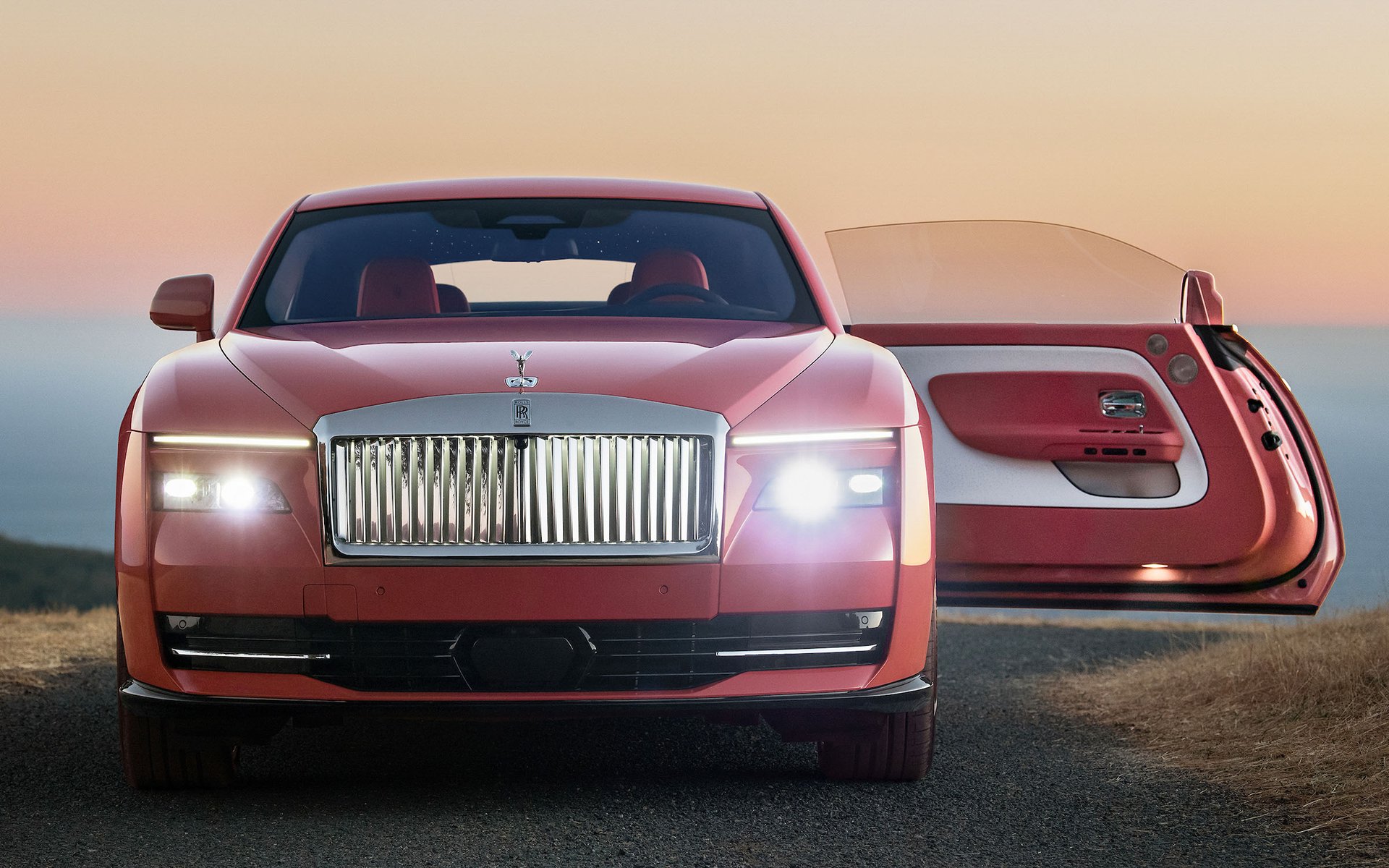
Jay: Locations tell you how to light. There's already something there, and you're playing with and supplementing what's there. For something like the Rolls job, you have to find the light. You put the car in the right position, you move around, you shoot through the bad light until you find the good light. And when you have a shot list, you're thinking: this area of the car looks great right now. I'll nail that here. The next spot might be better for these other angles.
I've actually only been able to truly light a car on location a couple of times. Most of the time, you're using natural light and finding the right time of day. When I’ve worked in studios, I've kept it fairly simple—the car is always the hero. There's incredible tech out there, LCD lighting in LA studios, painting with light, CGI. Whole other levels of production. But most of the time there are compromises: budget, logistics—you can't take the car to LA, you've got to shoot it in a working garage and make it look like a studio. So you keep it simple, and then process it to give it a bit of style through your own aesthetic.
Rob: Tell me more about the problem solving that accompanies these types of jobs.
Jay: I love it. I love for a shoot to go smooth, but the epic-ness of chaos is memorable and exciting. No matter how hard it is, I still enjoy it.
The challenges almost always come down to the same things: lack of production, lack of budget, lack of time, lack of manpower, or lack of information. If you have limitless resources of all five, things go smoothly. But one of those things is missing on almost every job.
The worst is not having enough information. If that happens, you're going to get surprised on location and have to think outside the box. I like pressure, but I’d rather be fully prepared.
The key is to ask questions. Don't be afraid to be a pain. But there's a push-pull. At a certain level, producers want you to ask questions, but they don't want you to be a nuisance. You're one part of a huge puzzle. If you don't ask enough, you'll show up and be in trouble. So: be open-minded, be flexible, push for information without being too much of a pain. Clients love knowing you're a problem solver. Even before a shoot, if you can say "we could save time if we do this first,” they will love that. And it frees you up to explore extra ideas, or to troubleshoot if something goes sideways.
 Rob: Tell me about the Rolls-Royce project. How did it come about?
Jay: This is another interesting one, because you don't always know how your reputation travels. The agency's executive producer was in New York, putting together a project in Monterey for Rolls-Royce North America. He reached out to a location scout who works with a drone operator. The executive producer asked, "Do you know an automotive photographer?" The drone operator's wife—someone I've never met—recommended me to the location scout, who told the executive producer. She apparently said something like, "If you need a photographer in the Bay Area for automotive, you've got to look at Jay." I still don't know her to this day.
So I connected with the crew—the executive producer, the drone guy, the location scout—and we were out at beautiful locations working with these cars. Long days, early mornings, late evenings in the summer. The length and intensity of those days bonded us. We played music, enjoyed the work. It became my most favorite job I'd ever done.
 Rob: You mentioned before we started that all your locations were scouted and permitted, but it was still a pretty run-and-gun shoot. Tell me about that.
Jay: We all have our expectations of what a shoot is like, and then there's the reality. Rolls-Royce is one of the top luxury brands in the world, so you picture King Charles being there, a luxurious set, full support. But this was a social media campaign for Rolls-Royce North America, not Rolls-Royce Global, not a print advertising campaign. Specific budget out of a bigger brand.
We covered multiple locations and cars to build an image library. No lighting. No grip truck. No overhead silks. Nothing. That was a big surprise. But I thought: I’ve shot cars on track, and those are run-and-gun and very physical jobs. You're hustling to cover every spot and often in harsh light. On this job, you're constantly in and out of cars, moving to the next spot, running, and shooting as much as you can.
And actually, the logic makes sense. The bigger the crew, the less flexible, the slower things move. They put their resources toward transporting the cars, keeping them clean, scouting, location fees, permits, and hiring competent people to shoot and document. Maybe the images aren't technically "perfect," but for social, even for a very high-end brand, a library of sixty really good images might be worth more than six perfect ones.
Curating at the end is its own task—narrowing it all down. And I learned some things on that job. The car will talk to you. Sometimes it's perfect right where it is. Don’t move it, let's work it. Other times you have to recognize: we have 30 minutes here, we need to move on. Once you park a car, especially with logistics involved, you’re committing to that spot. You're telling the whole crew, this is it. And maybe around the corner there's something better. That's a real risk.
I had to open up on that job. Don't spray and pray, but also: push. "Don't move that car, give me five more minutes, I can knock out ten right here." People appreciated that. And equally: "This isn't working, let's go, hit the next spot." Being willing to call it both ways.
 Rob: We’re living through a challenging time in the industry. What’s motivating you to stay in it and keep pushing forward?
Jay: It is challenging right now. AI, rights grabs, clients asking for more deliverables with smaller budgets. And video: there's a real push for photographers to do both, and I've done some of both. But my heart and soul is still in photography.
The industry's always been up and down. When I started assisting, the established guys were already saying it wasn't what it used to be. And here we are saying the same thing. But it's also just as exciting as ever. More images are used than at any point in history.
As for AI, I want it to help solve problems. There's still no tool that can process images at the speed clients want right now. But the subtle tools that are already here, built into Lightroom and Capture One, are pretty amazing. AI masks, selective removal. That stuff is incredible.
I think AI is going to end up being treated like any other genre or tool. Retouched fashion photography gets a pass. Special effects in movies get a pass. AI will find its place.
What I'm most excited about is continuing to do what I do and getting to higher levels—bigger brands, bigger productions. But my heart is also still with editorial. That's how I started, and those smaller shoots are still really fun.
Find Jay on Daybreak, https://daybreakdirectory.com/photographers/jay-watson, and on his website, www.jaywatson.com
Comments
No comments yet